Automated Pipeline Right-of-Way Detection
Using remote sensing data to train a deep learning model to detect unregistered pipeline right-of-ways in Pennsylvania
Year
2026
Scope
BGIS Capstone Project
Client
SAIT, Enverus
Project Abstract
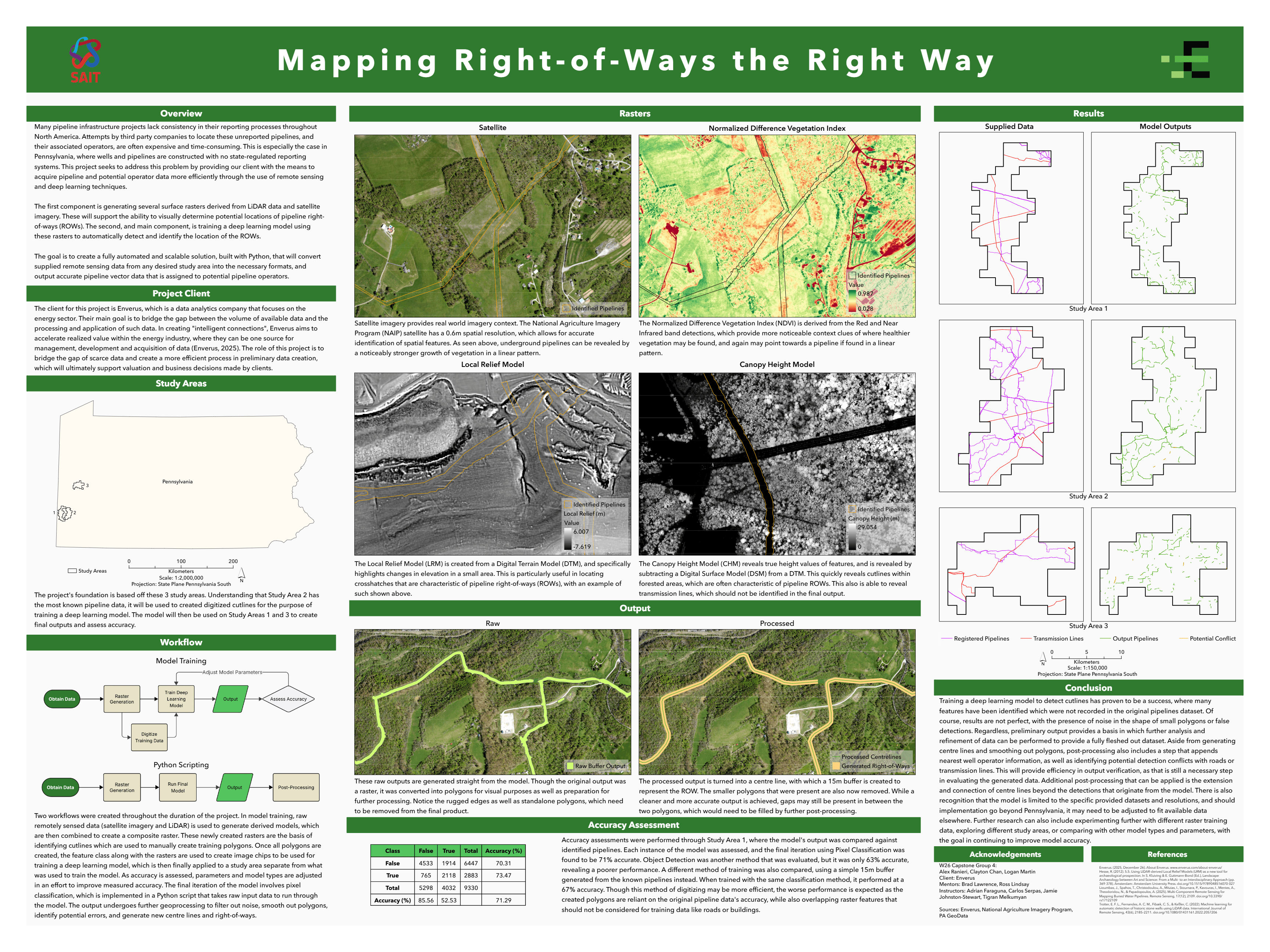
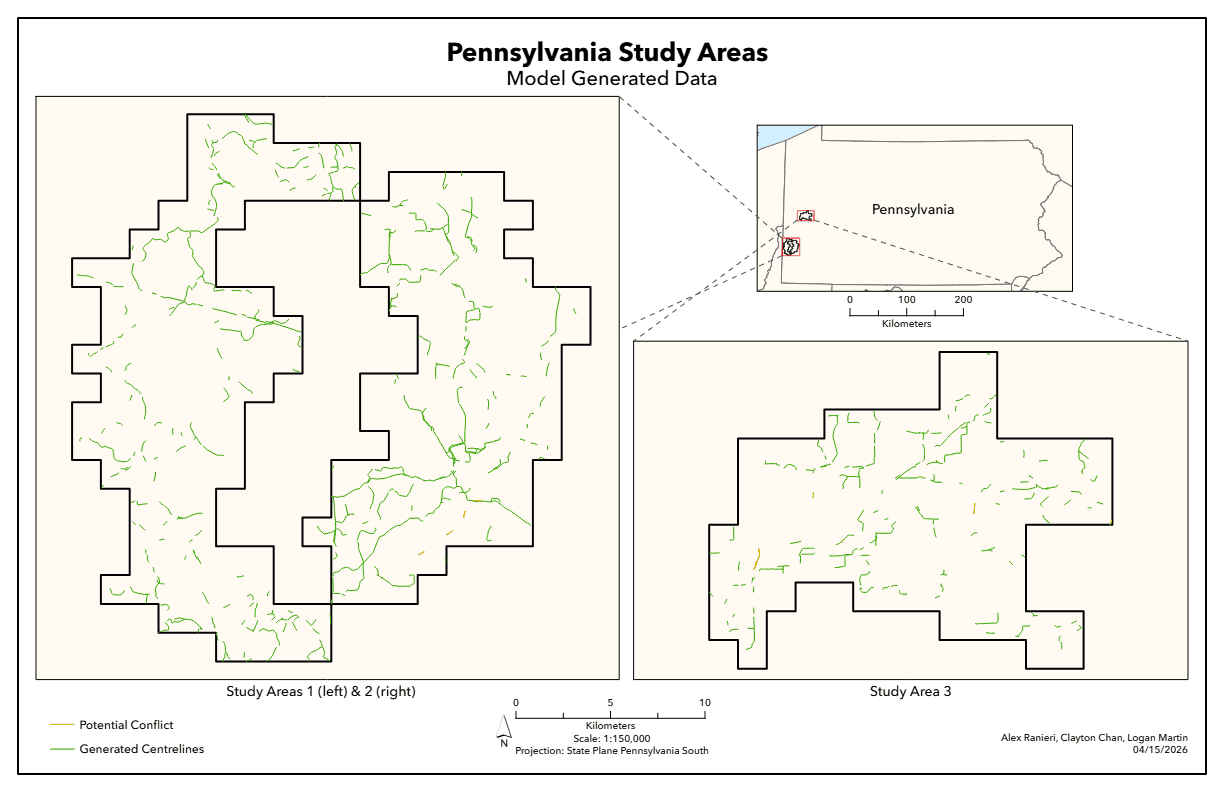
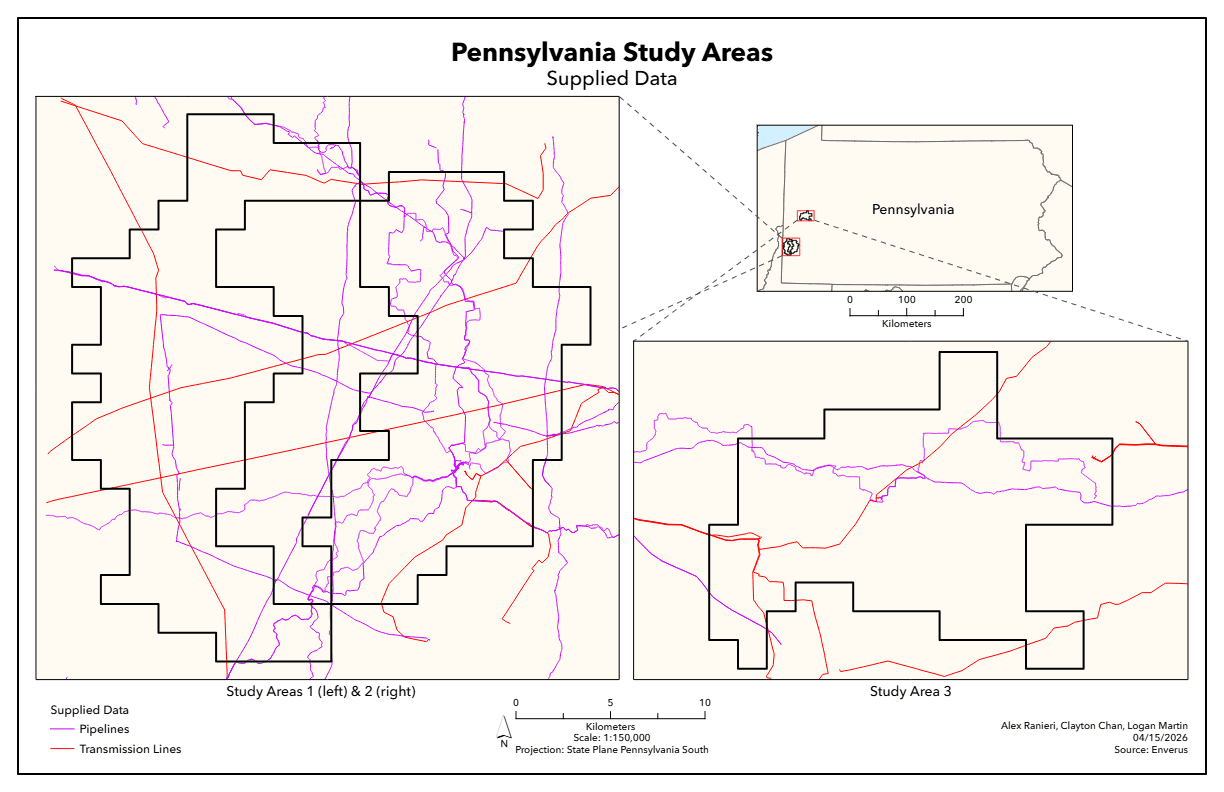
Many pipeline infrastructure projects lack consistency in their reporting processes throughout North America. Attempts by third party companies to locate these unreported pipelines, and their associated operators, are often expensive and time-consuming. This is especially the case in Pennsylvania, where wells and pipelines are constructed with no state-regulated reporting systems. This project seeks to address this problem by providing our client with the means to acquire pipeline and potential operator data more efficiently through the use of remote sensing and deep learning techniques.
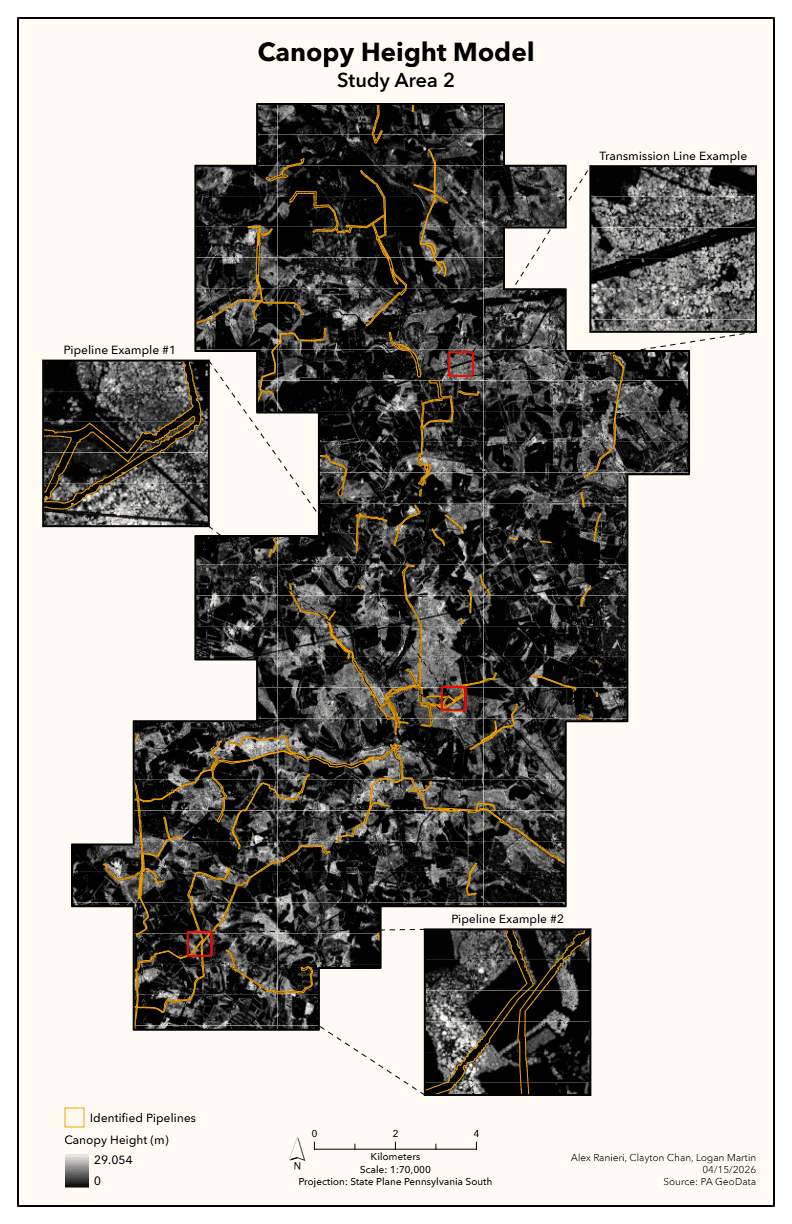
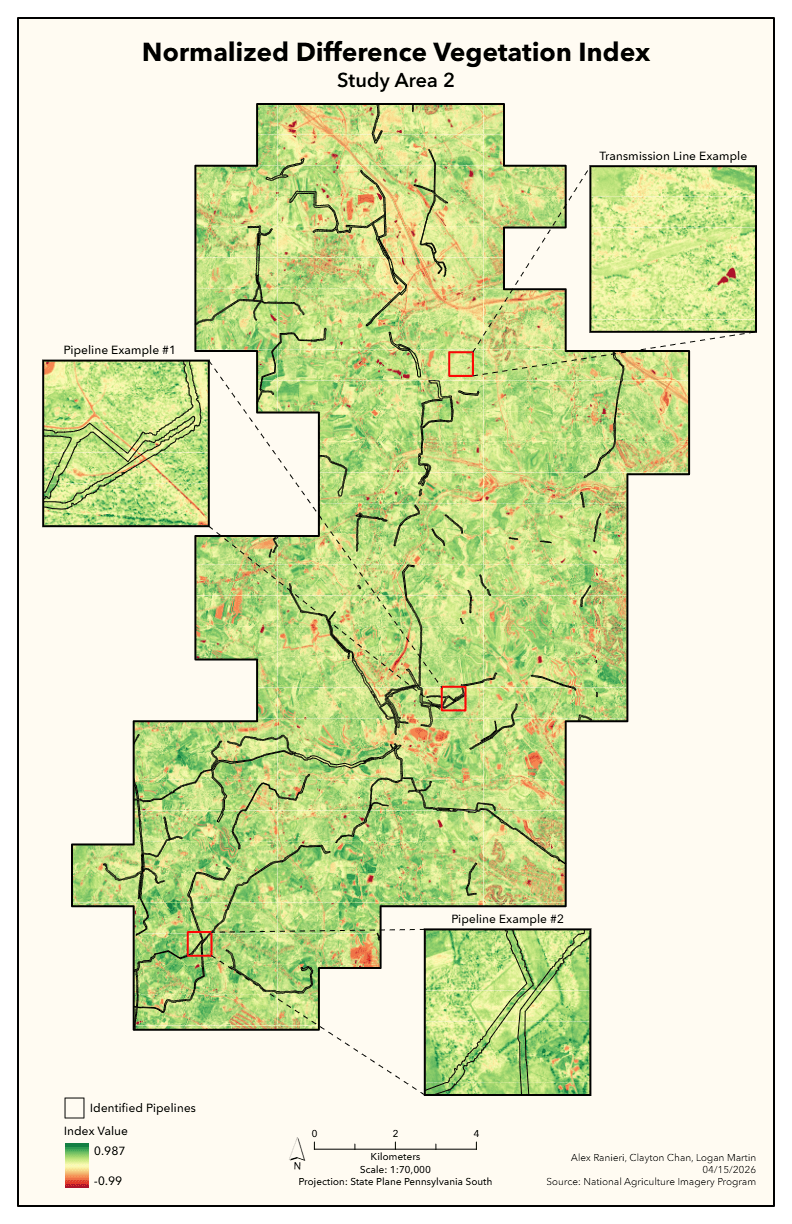
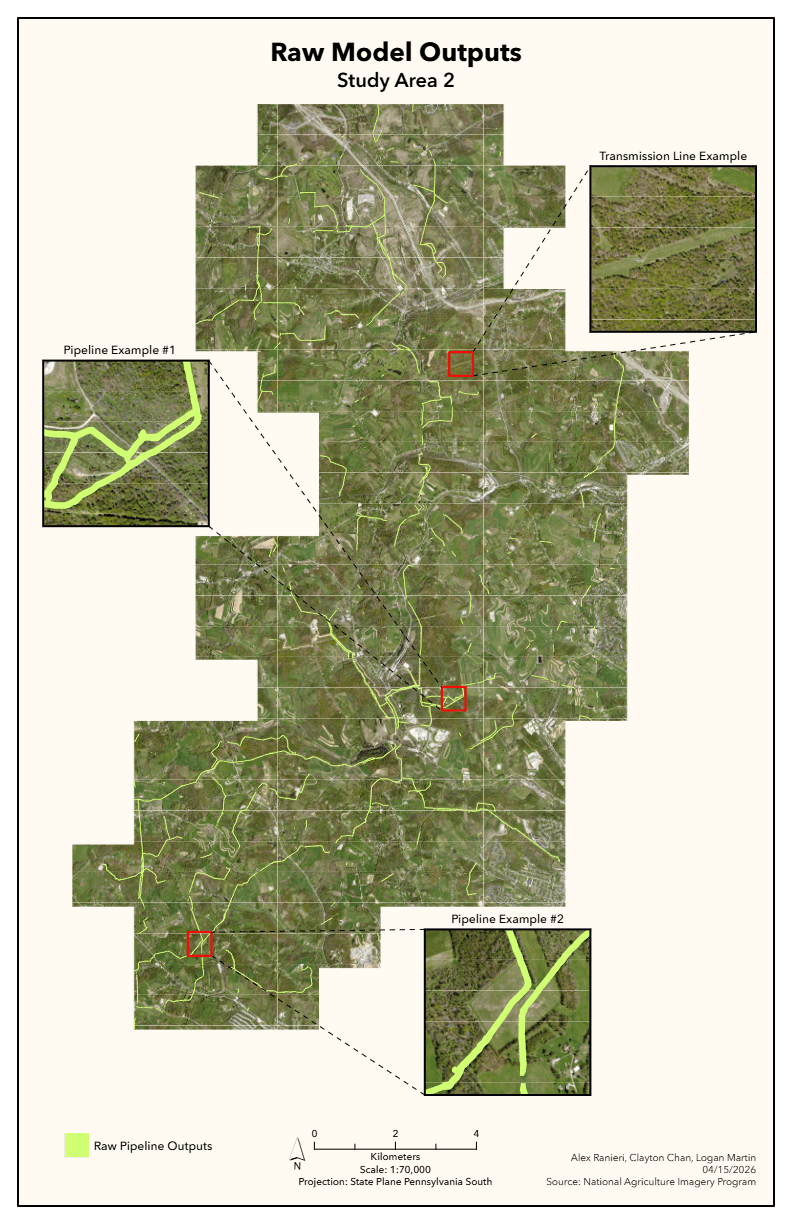
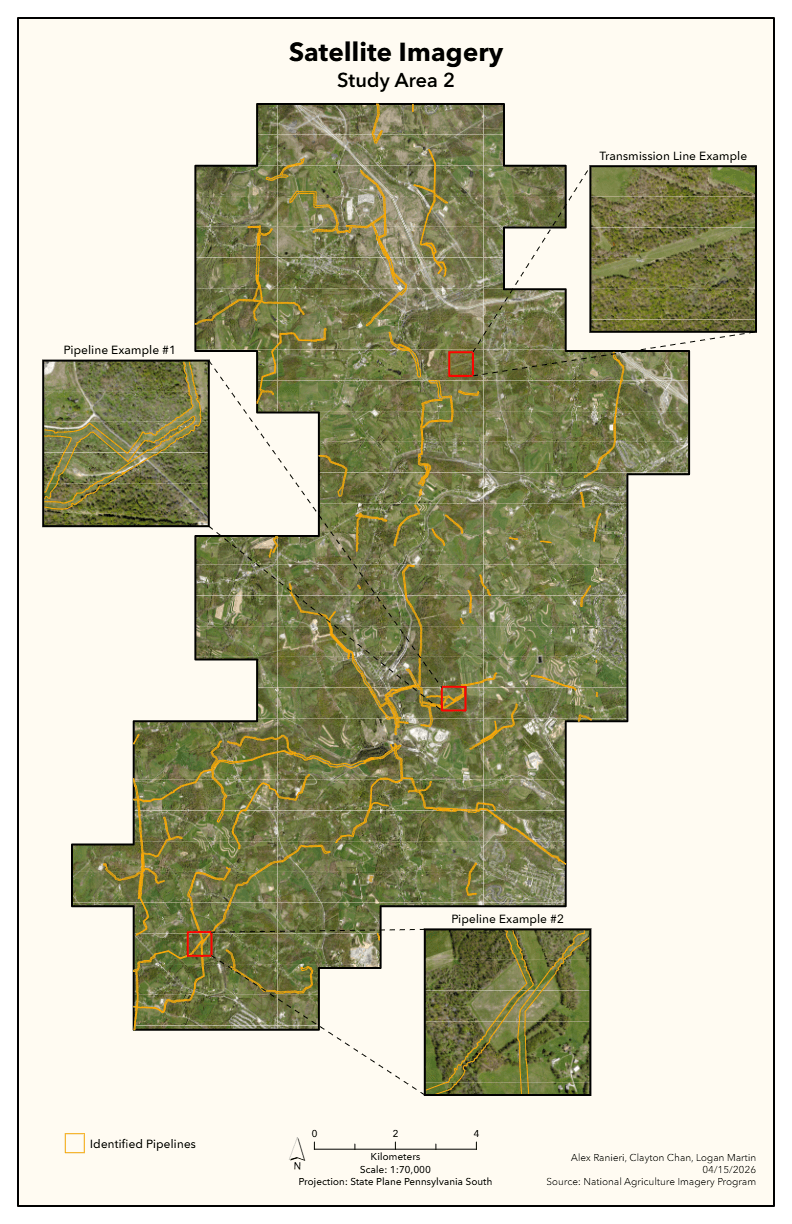
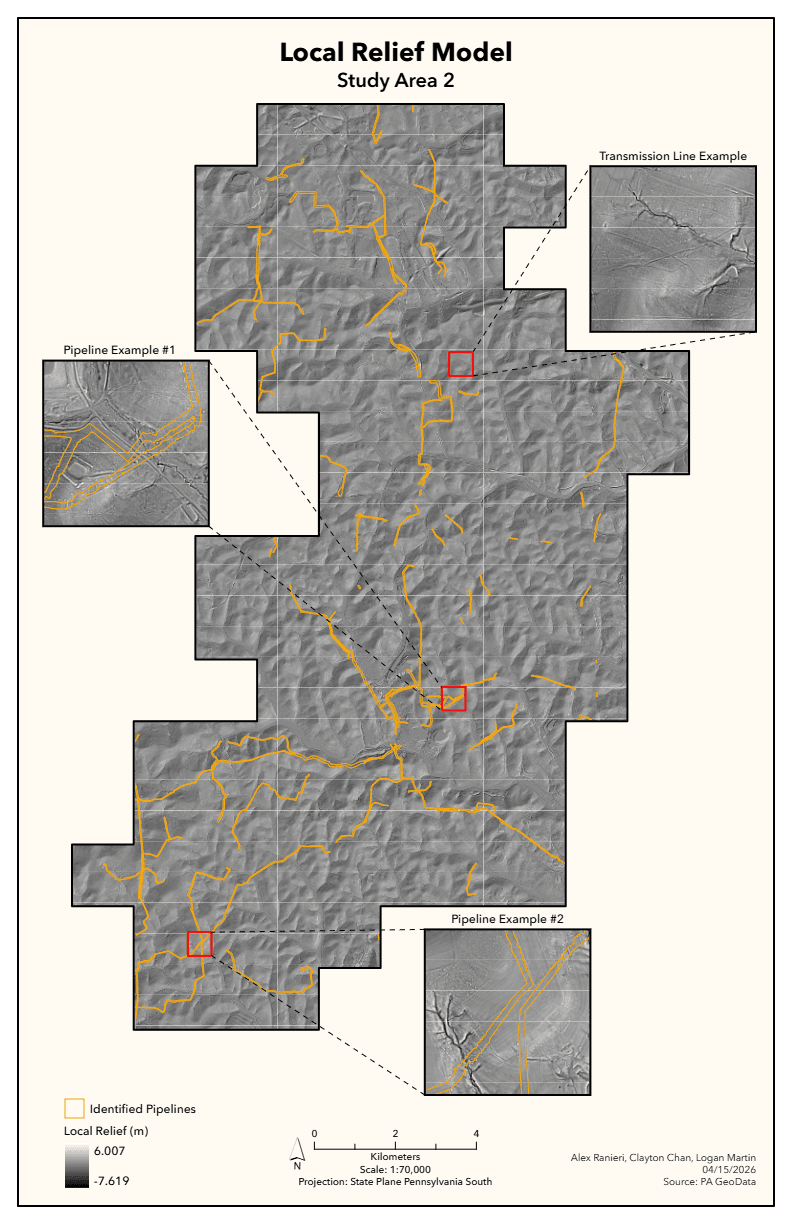
The first component is generating several surface rasters derived from LiDAR data and satellite imagery. These will support the ability to visually determine potential locations of pipeline right-of-ways (ROWs). The second, and main component, is training a deep learning model using these rasters to automatically detect and identify the location of the ROWs.
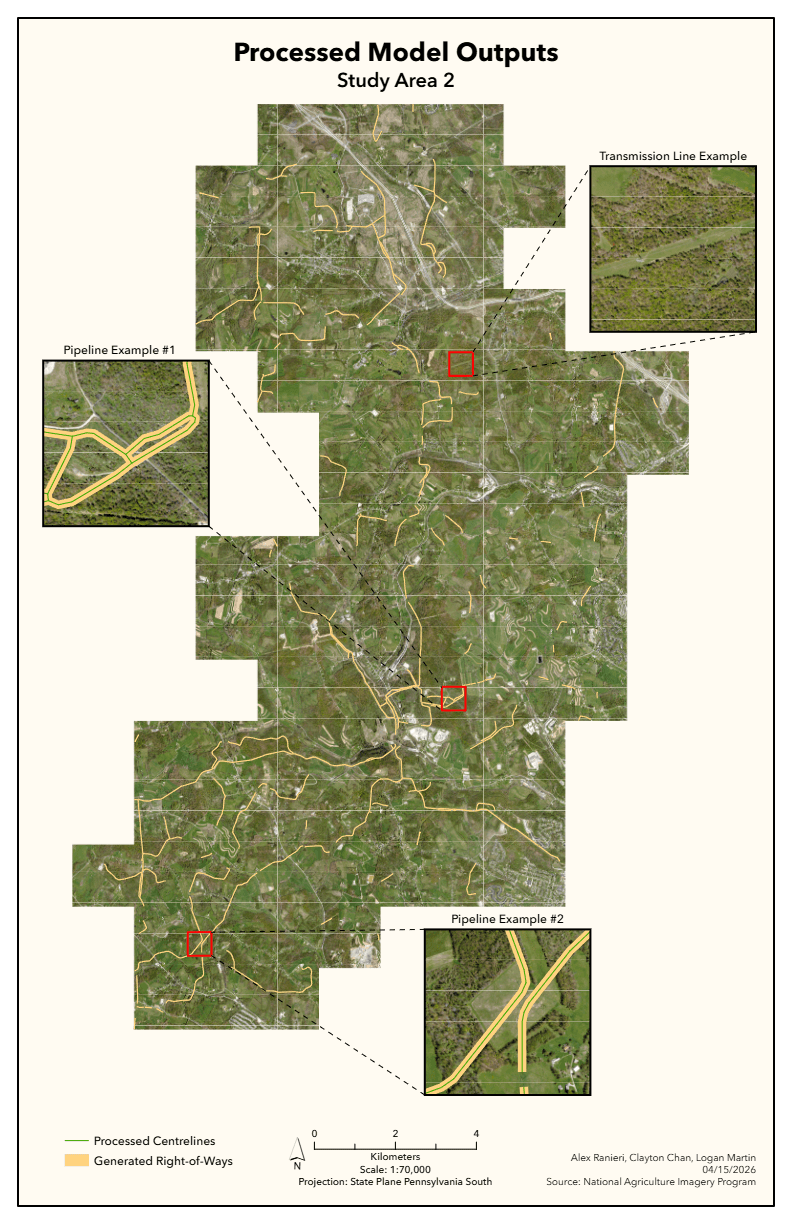
Our goal is to create a fully automated and scalable solution, built with Python, that will convert supplied remote sensing data from any desired study area into the necessary formats, and output accurate pipeline vector data that is assigned to potential pipeline operators.